The prepaid phone was the last piece, and it nearly wasn't findable.Nearly.Webb tracked the purchase through the carrier's records — a prepaid SIM activated four weeks before the gala, at a convenience store in Midtown that had security cameras. The cameras showed a woman purchasing the phone. She was wearing a coat with a high collar, a hat, the common armor of a New York winter. Her face was not visible.But her hands were.Priya had the footage enhanced. She had spent enough time watching Elise Hartwell's hands on the nine cameras from the gala — the precise, deliberate movements of a woman who moved with intention — to recognize them. She sent the footage to a forensic image specialist.The specialist came back with a probability assessment, not an identification. Seventy-three percent consistent with the hand morphology of an individual of Elise Hartwell's documented age and anatomy. Useful. Not sufficient on its own.But the SIM had been activated from a location twelve blocks from the Meridian Gallery.And the single text sent from that phone — to Conrad Vane's number, at 8:31 PM on March fourteenth — had been sent from a cell tower serving a one-block radius around the Meridian.Meaning: whoever sent that text was inside or immediately outside the Meridian Gallery at 8:31 PM.The cameras placed Elise Hartwell inside the gallery at 8:31 PM.Priya compiled the packet and put it on Webb's desk."It's circumstantial," he said."Most of it is," she agreed. "The compound on the program is physical. Kerr's statement is direct testimony. The rest is circumstantial." She sat down. "But it's the kind of circumstantial that doesn't have another explanation. A prepaid phone purchased near the gallery, activated four weeks before the murder, used to send one text from inside the gallery at the moment of death, to the victim. The text sent by someone whose hand morphology is consistent with the primary suspect." She paused. "What's the alternative explanation?"Webb thought about it. "There isn't one that makes sense.""There isn't one that makes sense," she agreed."A jury—""A jury will have the compound evidence, the program, Kerr's testimony, the timeline, the motive, and this." She tapped the packet. "I've convicted on less. So have you."He looked at the packet. "When do we arrest?""Tomorrow morning." She stood. "I want to give her one more night. Not for her sake. For mine." She picked up her jacket. "I want to make sure I haven't missed anything."She hadn't missed anything.But she spent Tuesday night going through it all again, from the beginning, because that was who she was.
📚 Continue Reading

14 parts
HOT
BURNING BRIDGES BACK
Victoria Blackwood
1 hours 33+ Readers

HOT
The Copycat Files
Daniella Storm
1 hours 36+ Readers
HOT
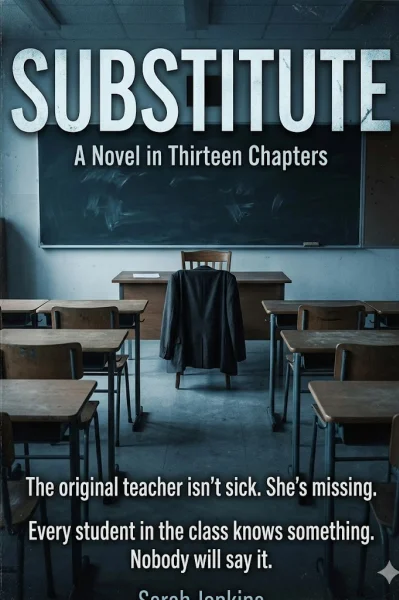
SUBSTITUTE
Scarlett Rivers
1 hours 43+ Readers

HOT
THE 9TH CONTACT
Luna Everett
1 hours 41+ Readers