
HOT
THE BRIDE WHO STAYED
Scarlett Rivers
1 hours 75+ Readers
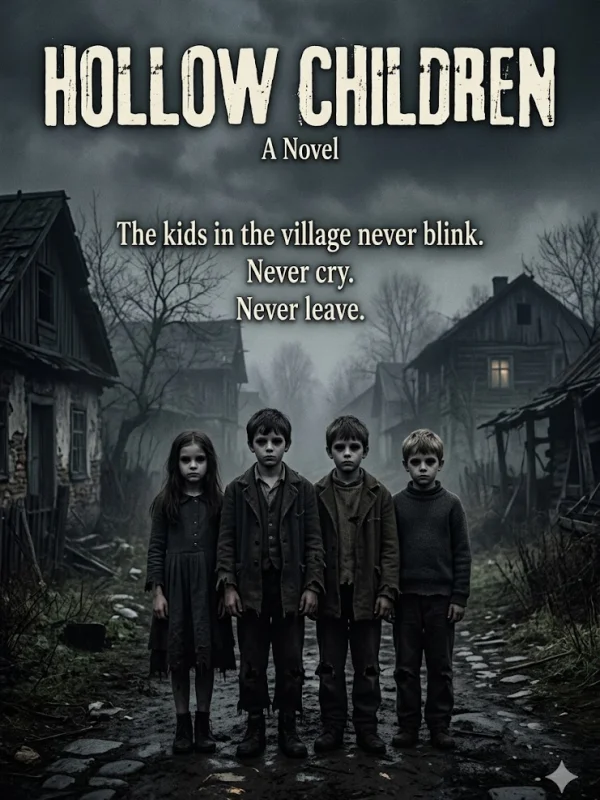
A Note The village of Sunderkhal exists in the Chamoli district of Uttarakhand. It appears on no government map printed after 1987. Population records from the last census list it as 'seasonal — not s
0
Chapters
11,469
Words
36
Reads
58 min
Read Time
Prologue: What Rajan Found
From the unpublished field notes of journalist Rajan Sood, October 2019.
He disappeared on November 3rd, 2019. These notes were recovered from his bag,
which was found on the Sunderkhal road, twelve kilometers from the village.
The bag was dry. It had rained for four days.
October 28. Arrived at the last motorable point before Sunderkhal at 3 PM. The road ends at a broken concrete barrier that was clearly not placed there by the PWD — someone dragged those slabs. No sign to the village. The local taxi driver, a man named Bhim from Gopeshwar, refused to come past the Langsi bridge. He said his father drove a government health worker up to Sunderkhal in 1998 and when the man came back his hair had gone white. I assumed this was a story. Bhim did not seem like a man who told stories.
The walk to the village is approximately four kilometers on a path that is technically maintained. The stones have been cleared. The drainage ditches on the side are clean. Someone takes care of this road. I found no one on it.
The village comes into view around a bend in the last kilometer. Twelve houses, maybe fifteen. Stone construction, the older kind, walls thick enough to hold the cold out. A central well. Terraced fields, winter bare. Prayer flags on the upper slopes — Buddhist, which is unusual for this region, which is primarily Hindu.
The first thing I noticed: it was completely silent.
Villages in Uttarakhand are not silent. There are animals, children, the sounds of cooking, of someone chopping wood. Sunderkhal had none of this. It was three in the afternoon, clear sky, the kind of day when village life should be fully audible.
The second thing I noticed: the children.
There were seven of them in the central square. Ages ranging from approximately five to fourteen. They were standing still. Not the still of children who have been told to stand still and are managing it imperfectly. The still of objects.
I walked into the square. They watched me approach. All seven of them tracking my movement with the precision of a single organism, heads turning together, no one looking away, no one shifting their feet.
I said hello in Hindi. Then in Garhwali.
None of them responded.
I stood three meters from the nearest child — a girl, maybe eight, in a red sweater that was too large for her. I looked at her face.
She did not blink.
I watched her for — I counted later, I am trained to count — forty-seven seconds. She did not blink once. Her eyes were fully open, dark, and absolutely dry.
I looked at the others. None of them blinked.
I know what it looks like when a child stares at a stranger. I have covered stories in remote villages for twelve years. Children stare. Children run away. Children ask questions. These children simply watched me with the specific quality of — I have been trying to find the right word since I walked back to my tent at the Langsi bridge. The word I keep arriving at is patience. Not the patience of a child who has been told to wait. The patience of something that has been waiting for a very long time and has stopped noticing that it is waiting.
An adult came out of one of the houses eventually — a woman, fifties, who said she was the school teacher, who said the children were shy, who offered me tea and answered my questions in the smooth, prepared way of someone who had answered these questions before.
I drank the tea. I did not drink more than two sips.
I am going back tomorrow. I need to talk to more adults. I need to understand how long these children have been here, whether any have left for school or marriage, whether any outsider has examined them medically.
I have filed three stories this year on child welfare in remote Uttarakhand. None of them prepared me for today.
Tonight I keep thinking about the girl in the red sweater.
She did not blink.
And when I walked away, I looked back once, from fifty meters.
She had turned to face me.
She had not moved her feet.
Rate this novel:
1 pages · 589 words
2 pages · 956 words
1 pages · 771 words
1 pages · 748 words
2 pages · 980 words
1 pages · 572 words
1 pages · 620 words
1 pages · 612 words
1 pages · 791 words
2 pages · 859 words
1 pages · 477 words
1 pages · 658 words
1 pages · 607 words
1 pages · 539 words
2 pages · 1,690 words
Login to leave a review.
Scarlett Rivers

Luna Everett

Daniella Storm

Luna Everett