She found nothing.Not blankness. Not dissociation, which she knew how to recognize — the specific retreated quality of a child who had put themselves somewhere else to survive something. Not the flat affect of severe depression. Not the managed presentation of a child performing normalcy for a stranger.Nothing.The girl's name, when asked, was Paro. She gave it in the same three-second delay. Her heart rate was forty-nine. Her eyes were open, dark, clear and dry and absolutely still.Meera leaned forward. She said, very quietly, in the tone she used when she wanted a child to feel safe rather than assessed: "Paro. Are you all right? Are you happy here?"The girl looked at her.The three-second delay."Yes," she said."Is there anything you want to tell me?"The pause was longer this time. Six seconds. Seven."No," the girl said.But her eyes, in those seven seconds, had done something they had not done in the entire assessment. They had moved — briefly, microscopically, in the direction of the door. Not a glance. More than that. The specific movement of a person checking whether they were being heard from outside.The girl had looked at the door and looked back in seven seconds.And she had said no.Meera wrote in her notebook, in English — a language Kamla Devi had not demonstrated fluency in: She checked the door. She checked it.* * *After the eleventh child, Kamla Devi said the remaining six were occupied with farm work and she would arrange them for later.Meera said of course.She went to the community hall and sat on the bed with her notebook and thought about forty-nine beats per minute and eyes that did not blink and a girl checking the door before saying no.She thought: what do you do with a child who might be trying to tell you something and cannot?She thought about the door check. The involuntary quality of it. Reflex rather than decision. Paro had not decided to check the door. Her body had checked the door while her mouth was saying no.Meera had worked with children in controlled situations — families where information was managed, where adults curated what children said in front of them. She knew the signs: the language that was a little too prepared, the glances that were asking permission, the answers that came a beat too fast or a beat too slow.The door check was the only uncontrolled thing she had seen in two days.She opened her notebook to a fresh page. She wrote the girl's name: Paro. She drew a small symbol next to it — her personal shorthand for: she's trying to communicate.She needed to find a way to be alone with the girl.She needed to do it before Kamla Devi noticed she was trying.
📚 Continue Reading

HOT
THE WATCHER'S LIST
Luna Everett
1 hours 34+ Readers

HOT
DON'T OPEN THE ATTIC
Daniella Storm
51 min 37+ Readers
9 parts
HOT
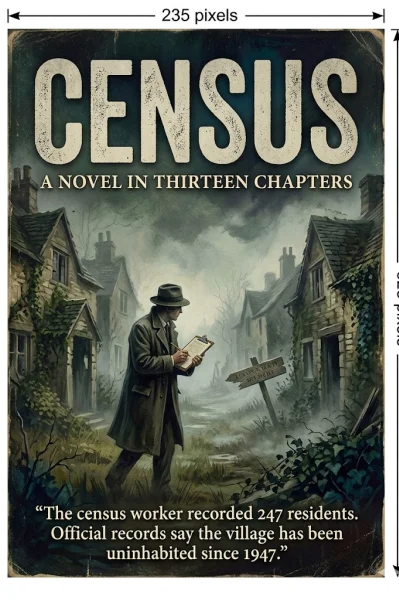
CENSUS
Luna Everett
1 hours 34+ Readers

HOT
TEMPLE OF TEETH
Scarlett Rivers
57 min 27+ Readers