"You always knew it would be me," she said."I hoped it would be you," he said. "I designed it so it could be you. But I didn't know—" He paused. "I didn't know you'd move this fast. I thought I had more time before they acted. I thought I had until December at least. When they accessed my car on November 3rd, I had to move faster than planned." He paused. "The disappearance was improvised. The pre-positioned elements — the drive, the contacts, the Geneva safe house — those were planned. The timing was not.""The message," she said. "Don't come home yet.""I had a forty-second window at the airport," he said. "They thought I was dead. I had the phone — I'd taken it from the evidence bag the night before, while I still had access. I had forty seconds in a Heathrow bathroom before the flight boarded.""Five words," she said."The most important five words I have ever sent," he said.She looked at him across the rajma."I was furious," she said. "I was—" She paused. "I am still—""I know," he said."Don't," she said. "Don't tell me you know. Let me finish."He was quiet."I am still angry," she said. "About the four days. About the years of not knowing. About the fact that you designed a plan in which my grief was a component — my grief was something you factored in as a useful cover, and that is—" She stopped. She looked at him. "I will be angry about that for a long time.""Yes," he said. "I know.""And," she said. "The case is complete. Three people's deaths have accountability. The technology that killed them is exposed. The companies and the people who built it are in custody or under investigation." She paused. "What you did was the right thing. I will be angry about how you did it and I will also know that it was right. Those two things will coexist for as long as they need to."He looked at her."Yes," he said. "That seems fair.""It is fair," she said. "Eat your rajma."He ate his rajma.
📚 Continue Reading

HOT
THE FLATMATE
Luna Everett
1 hours 33+ Readers

HOT
THE BRIDE WHO STAYED
Scarlett Rivers
1 hours 75+ Readers
9 parts
HOT
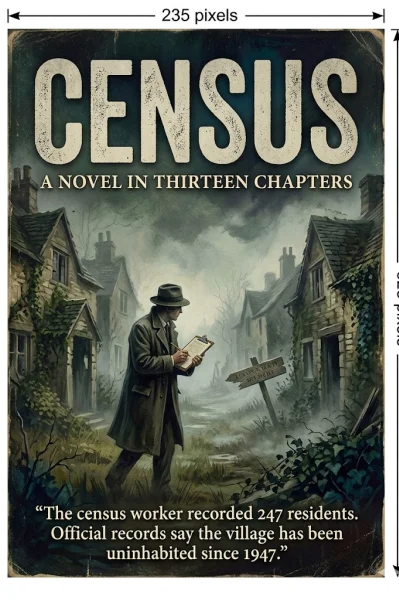
CENSUS
Luna Everett
1 hours 33+ Readers

HOT
TEMPLE OF TEETH
Scarlett Rivers
57 min 27+ Readers